
La Saint-Barthélemy (24 août 1572)
Un grand massacre de protestantsAprès une tentative de réconciliation religieuse, Charles IX, poussé par les Guise, autorise l’assassinat des chefs protestants ; la situation dégénère en un massacre général.
Un mariage royal
Le traité de Saint-Germain en 1570 – nouvel essai de tolérance civile – qui clôt la troisième guerre de religion, suscite la colère des milieux ultra-catholiques menés par les Guise qui le considèrent comme trop favorable aux protestants.
La reine-mère Catherine de Médicis, dans l’espoir de sceller la réconciliation nationale, favorise le mariage du roi Henri de Navarre, futur Henri IV, qui est protestant avec Marguerite de Valois, sœur de Charles IX. Le mariage qui a lieu le 18 août provoque la venue à Paris de très nombreux nobles protestants de la suite du roi de Navarre.
La guerre des Flandres ?
Le chef du parti protestant, l’amiral de Coligny, qui a la faveur du roi, incite celui-ci à s’engager dans la guerre des Pays-Bas (ou des Flandres) aux côtés du prince d’Orange, pour soutenir les insurgés soulevés contre Philippe II d’Espagne. Il est convaincu qu’une guerre contre l’Espagne serait le meilleur moyen de réconcilier catholiques et protestants face à un adversaire commun.
L'attentat manqué contre l'amiral de Coligny
Le 22 août, un attentat est perpétré contre l’amiral de Coligny à sa sortie du Louvre où il assistait au Conseil du roi. L’attentat échoue et l’amiral n’est que blessé. Il est vraisemblable que cet acte soit le fait des Guise, furieusement opposés à la guerre des Flandres, commandités ou non par l’Espagne.
L'assassinat des chefs protestants
-
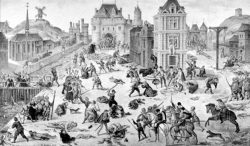
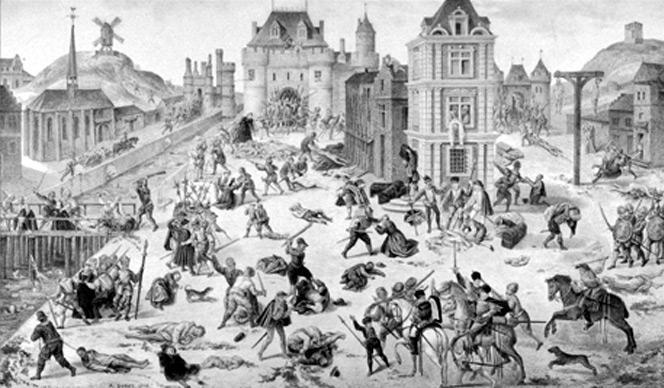
Saint-Barthélemy à Paris (1572) par François Dubois © S.H.P.F.
La nouvelle de l’attentat provoque la stupeur. La tension est extrême dans Paris.
Dans la nuit du 23 au 24 août, un Conseil royal se réunit, au cours duquel il est décidé d’assassiner l’amiral de Coligny et un certain nombre de chefs huguenots. La cloche de l’église Saint-Germain-l’Auxerrois sonne le tocsin.
L’amiral est sauvagement tué dans son logis et défenestré tandis que de nombreux gentilshommes huguenots sont massacrés au Louvre et en ville, surpris de nuit sans possibilité de défense, « tués comme des brebis à l’abattoir » comme l’a écrit Théodore de Bèze.
La situation dégénère en massacre généralisé à Paris
-
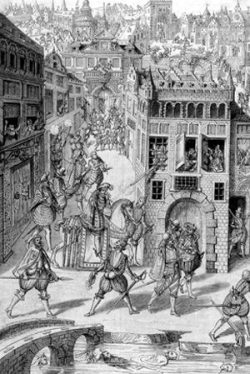
Saint-Barthélemy-24 août 1572 © S.H.P.F.

Pendant trois jours la tuerie se poursuit dans Paris, échappant au contrôle royal. La violence est extrême. Les catholiques qui portent une croix blanche à leur chapeau s’en prennent à toutes les maisons des protestants. Les rues sont rouges du sang versé. Le nombre des victimes est évalué à 4 000 à Paris. Le 26 août, le roi se rend devant le parlement et revendique la responsabilité du massacre.
Le massacre s'étend à la province
Au fur et à mesure que la nouvelle se répand en province la violence s’étend : à La Charité, Meaux, Orléans, Lyon et d’autres villes, des Saint-Barthélemy locales ont lieu d’août à septembre 1572. Il y a en tout au moins 10 000 morts en province.
Le pape Grégoire XIII accueille la nouvelle avec enthousiasme : il fait dire des messes d’action de grâce et fait frapper une médaille commémorative.
La Saint-Barthélemy entraîne une nouvelle guerre
La Saint-Barthélemy est le moment le plus dramatique des guerres de religion et marque le début de la quatrième de ces guerres.
Bibliographie
- Documents
- AUBIGNÉ Agrippa (d'), La Mort de Coligny | Fichier
- Livres
- BOURGEON Jean-Louis, Charles IX devant la Saint-Barthélemy, Droz, Genève, 1995
- CROUZET Denis, La nuit de la Saint-Barthélemy : un rêve perdu de la Renaissance, Fayard, Paris, 1994
- GARRISSON Janine, La Saint-Barthélemy, Complexes, Bruxelles, 1987
- Articles
- BOURGEON Jean-Louis, « Pour une histoire, enfin, de la Saint-Barthélemy », Revue historique, 1989, Tome 127, p. 83-142
Parcours associés
-
Des guerres de religion à la mort d’Henri IV (1562-1610)
Au XVIe siècle en France, la guerre entre la minorité protestante et la majorité catholique ne peut être évitée. En 36 ans, de 1562 à 1598, il y a 8 guerres...
Notices associées
-
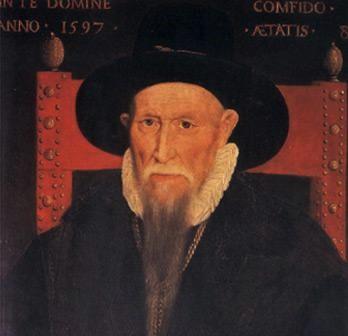
Théodore de Bèze (1519-1605)
Théodore de Bèze est un des personnages les plus importants du courant réformé. Il soutient Calvin et succède à celui-ci comme modérateur (président) de la Compagnie des pasteurs de Genève.... -
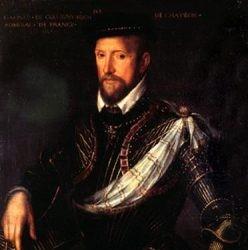
Gaspard de Coligny (1519-1572)
Gaspard de Coligny, de la puissante famille des Châtillon, se trouve très naturellement au service des rois de France. Pourtant, après avoir été capturé au siège de Saint-Quentin, il se... -
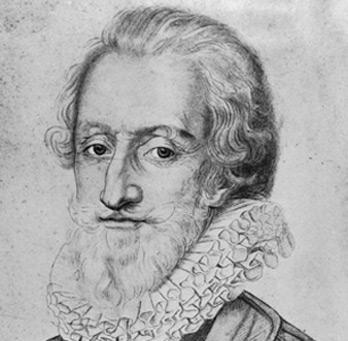
Henri IV (1553-1610)
Henri de Navarre, devenu roi de France en 1589 sous le nom d’Henri IV, met fin aux guerres de religion et restaure la paix civile et religieuse dans le royaume. -
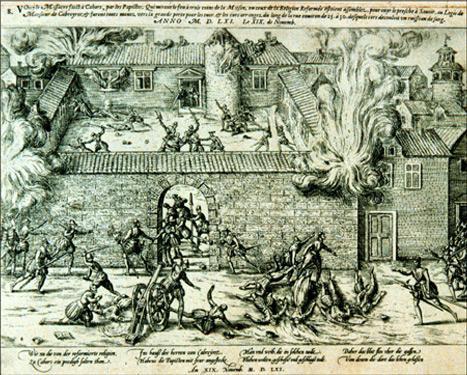
Les huit guerres de religion en France (1562-1598)
La France connaît au XVIe siècle une fracture religieuse : la grande majorité du pays reste fidèle au catholicisme, tandis qu’une importante minorité rejoint la Réforme. Le principe de la coexistence... -

L'édit de Nantes (1598)
C’est l’acte majeur du roi Henri IV car il institue la coexistence religieuse entre catholiques et protestants et impose la paix en France après 36 ans de guerre civile. -
Les Provinces-Unies du Midi (remplacée par l'Union des Provinces ou l'Etat huguenot - 04-03-2019)
Le calvinisme est porteur d’une théorie de l’État qui est appliquée pendant une vingtaine d’années dans le Midi. Il s’agit d’un système politique dans lequel le pouvoir émane de la... -
Le protestantisme après 1562
Dans la seconde partie du XVIe siècle (1562-1598), en dépit de persécutions et de longues périodes de guerre civile, les Églises réformées s’organisent. Un régime politique inspiré de l’organisation des Églises...