Le christianisme social
À la fin du XIXe siècle, des pasteurs, émus par la misère ouvrière, entament une réflexion sur la justice sociale.
Vers un socialisme chrétien ?
-
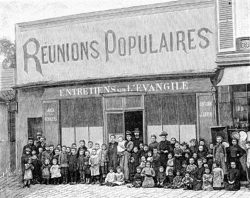
Paris, Salle du Faubourg Saint-Antoine © S.H.P.F.
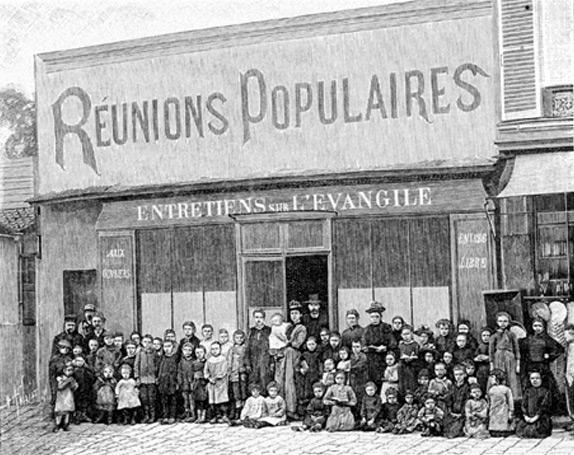
Après la Commune naît un nouveau mouvement théologique : le Christianisme social. La révolution industrielle a provoqué de telles misères dans les quartiers ouvriers des villes que des pasteurs se sont émus et ont amorcé une réflexion théologique sur la question sociale.
À partir de 1872, la Mission populaire évangélique, animée par le britannique Robert Mac All, avait attiré l’attention sur l’ignorance religieuse des classes ouvrières. À partir de 1878, le pasteur Tommy Fallot, issu d’une famille d’industriels et pasteur de la chapelle du Nord de Paris (ancienne Chapelle Taitbout), plaide pour un socialisme chrétien. Pour lui, il ne s’agit plus seulement d’assistance, de charité ou de morale mais de justice sociale.
Au même moment à Nîmes se constitue « l’École de Nîmes », autour de l’économiste Charles Gide, oncle d’André Gide. Celui-ci cherche une troisième voie entre capitalisme et socialisme. Il est à l’origine du mouvement coopératif : coopératives de production et de consommation. Il met l’accent sur la solidarité. En 1896 est créée la Revue de Christianisme social, revue qui paraît encore aujourd’hui sous le titre « Autre Temps ».
Dans les paroisses ouvrières
-
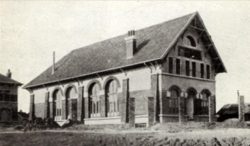
Fraternité de Liévin-Calonne © Mours
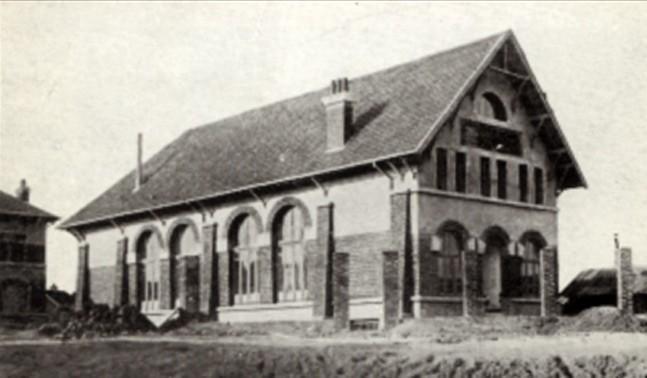
Le relais de Tommy Fallot est pris par les pasteurs Elie Gounelle à Roubaix et Wilfred Monod à Rouen. Ils œuvrent dans des paroisses ouvrières et créent des associations appelées « solidarités », sortes de maisons chrétiennes du peuple, où se côtoient protestants, catholiques et agnostiques.
Si le socialisme n’accueille pas ce mouvement à cause de sa dimension chrétienne, l’Église protestante du début du XXe siècle sera marquée par la dimension sociale chrétienne.
Bibliographie
- Livres
- CRESPIN Raoul, Protestants engagés, le christianisme social, Bergers et Mages, 1997
Notices associées
-

Tommy Fallot (1844-1904)
Devenu pasteur, Tommy Fallot est profondément marqué dès sa jeunesse par le peu d’intérêt que le protestantisme, très divisé à la fin du XIXe siècle, porte aux questions sociales. Il... -
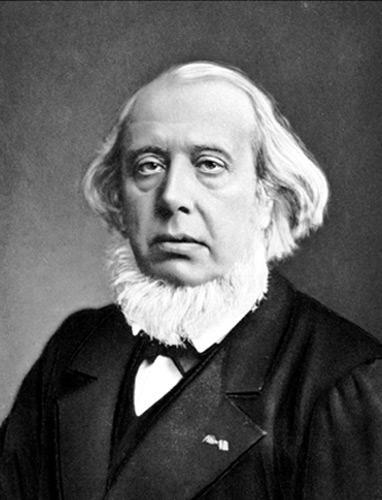
Le courant orthodoxe
Le courant orthodoxe insiste sur la juste doctrine, celle des réformateurs Luther et Calvin et sur une lecture respectueuse de la Bible. -
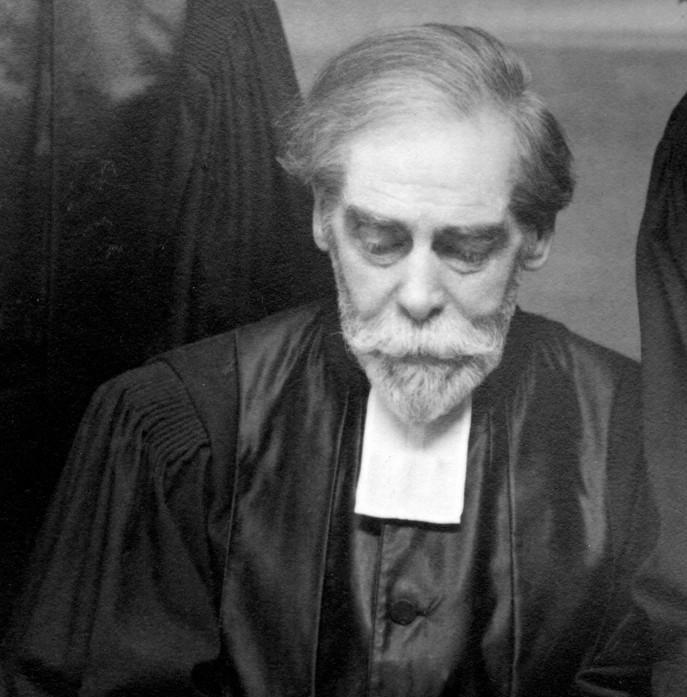
Wilfred Monod (1867-1943)
-
Le symbolo-fidéisme
Le symbolo-fidéisme insiste sur la foi, c’est-à-dire la relation avec Dieu, et relativise les doctrines. La connaissance de Dieu dépasse les formules et expressions humaines. -
Les conflits
Les conflits théologiques traversent toutes les communautés protestantes. Ils déterminent la création de nouvelles Églises séparées de l’État. Dans les Églises réformées, ils conduisent à une rupture entre orthodoxes et...